Home › School bus blog › School bus tracking in Mumbai: a practical guide for schools
School bus tracking in Mumbai: a practical guide for schools
Mumbai asks more of a school bus system than most cities: long routes, monsoon detours, tall housing societies and early starts. This guide turns those conditions into a buying and running plan.
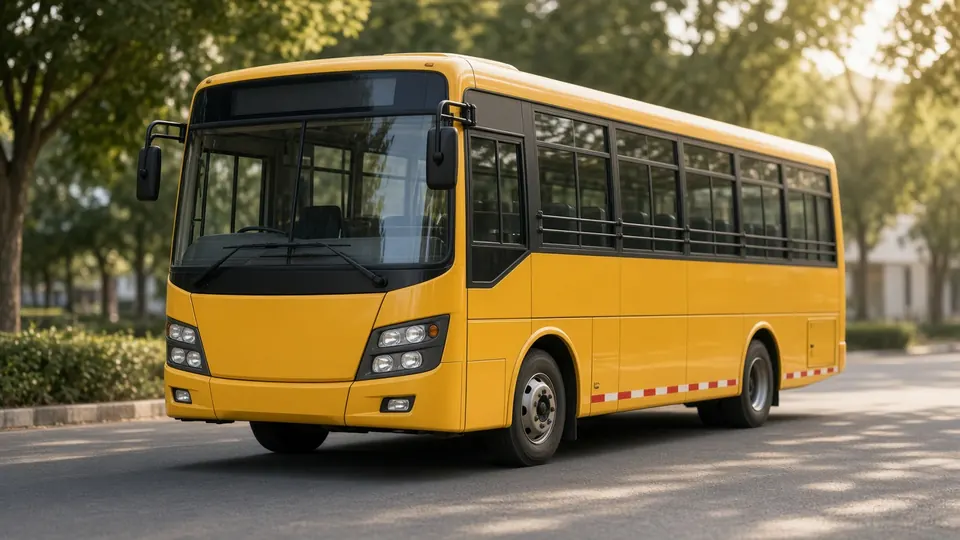
Related product: school bus GPS tracking in Mumbai
School transport in Mumbai is shaped by the city's geography. The city is long and thin, squeezed between the sea and the creeks, with most traffic funnelled along a few north-south roads. Schools draw students from far up the suburbs, from Thane and from Navi Mumbai. For about four months a year, the monsoon can reshape every route without warning. A tracking system that works well in a compact, dry city may not be enough here. This guide covers what Mumbai schools should plan for, and how to judge whether a system will cope.
Mumbai conditions that shape school transport
Long, linear routes
A school in Andheri may run buses from Dahisar in the north and Bandra in the south. A school in Powai may pull students from Mulund, Ghatkopar and Vikhroli. Routes follow the Western and Eastern Express Highways, S.V. Road, L.B.S. Marg and the link roads, all of them busy at school hours. On a long line, a delay at one junction affects every stop after it, and the last children on board feel it most.
Creek and harbour crossings
Schools that serve Thane, Navi Mumbai or the eastern suburbs often run routes that cross creeks by bridge. These crossings are natural bottlenecks, and their traffic can vary greatly from one day to the next.
The monsoon
From roughly June to September, heavy rain brings waterlogging at low-lying subways, junctions and stretches of road. Buses take detours, routes run late, and on the worst days schools change their timings at short notice. A system that only tells parents "the bus is late" is not much help. Parents need to see where the bus is and what it is doing.
Housing societies and tall buildings
Many Mumbai children live in tall buildings within gated societies. Pickups happen at the society gate, and getting a child from a high floor to the gate takes time. Too early, and the child waits in the rain. Too late, and the bus waits, holding up every stop after it.
Early starts and dark mornings
Long routes mean early starts, and in winter the first pickups happen before sunrise. That matters for cameras, since cabin cameras need night vision, and for parents' peace of mind.
What a Mumbai school should expect from a tracking system
| Mumbai condition | What the system should do |
|---|---|
| Long routes, uneven delays | A live map with an ETA that updates often. Satcop's tracker refreshes about every 5 seconds. |
| Monsoon detours | Wrong-direction alerts for staff, trip history showing the route actually taken, and school announcements to parents. |
| Patchy signal under flyovers | Fallback tracking that keeps recording when the signal dips. |
| Tall buildings, society gates | An alert by distance, about 2 km before the stop, rather than by timetable. |
| Many stops per route | RFID tap-on and tap-off, so the attendant's list updates by itself. |
| Dark winter mornings | Cabin cameras with IR night vision. |
Running the monsoon season
The monsoon is where a good system and a good routine pay off most. A practical plan:
- Before June, pull up last year's trip history and list the stops that were often missed or badly delayed during the rains. Agree alternative pickup points with the parents at those stops.
- Each rainy morning, the transport manager watches the dashboard in the first half hour. Wrong-direction alerts show which buses have taken detours. That is normal in the rain, but the office should know about it.
- When a route is badly delayed, send one announcement to the parents on that route through the app. It saves the office dozens of phone calls.
- If timings change, announce it to all parents through the app the evening before, or as early as possible.
- After each heavy-rain day, check visited and missed stops, and follow up any child who was expected but not recorded as boarding.
Attendance on Mumbai routes
On a route with a dozen society gates, the attendant spends the trip managing the door, helping small children and keeping order. A paper list is the first thing to slip. With an RFID card reader on the handrail, each child taps on and off. The attendant's app updates, the parent sees the boarding, and the school has a record without anyone writing anything down. Schools that also want to confirm campus arrival can add UHF readers at the gate. Our post on how RFID and UHF attendance flow explains the full picture.
Cameras for long routes
When children spend a long time on a bus, parents want to know the cabin is watched. A dome camera with IR night vision covers the inside, and a wide-angle dashcam records the road. Footage stored in the cloud or on the device is kept for authorised access only. A live view depends on the school package. See dome camera vs dashcam for the trade-offs.
Choosing a provider for a Mumbai school
Ask every provider these Mumbai-specific questions, alongside the usual ones on price and support:
- How does the tracker behave when the signal drops under a flyover or in a low-lying area?
- How quickly does the map update? Can parents see a bus crawling, or only a dot that jumps?
- Does the parent alert work on distance or on a fixed time?
- How will staff know when a bus takes a monsoon detour?
- Can the school send one message to all parents on a route?
- Who installs the devices, and how quickly can they come back if a device fails?
A first-term rollout plan
Schools that go live in Mumbai usually do best when they avoid starting in the middle of the monsoon. Install and train in the weeks before a term begins, run the first fortnight with the attendant keeping a paper list alongside the RFID taps, and tell parents in advance what alerts to expect. Use the first month of trip history to fix stops that are often missed. Then, before the rains arrive, agree monsoon fallback stops with the parents on the routes most likely to flood. By the first heavy-rain week, the transport team already knows the dashboard, and parents already trust the alerts.
How Satcop works with Mumbai schools
Satcop India's head office is in Kharadi, Pune, a short trip from Mumbai. We travel to Mumbai, Thane and Navi Mumbai schools to demo, install and train. We design and manufacture the tracking hardware in India and install it ourselves. Our school bus product runs at 200+ schools, on 10,000+ buses, for 200,000+ students.
For the product details and a demo request, see school bus GPS tracking in Mumbai. To understand quotes before you talk to anyone, read the 10 factors that decide a school bus GPS tracker price.
Frequently asked questions
Does school bus tracking work during the Mumbai monsoon?
A 4G tracker with fallback tracking keeps recording when the signal dips. Staff get wrong-direction alerts when buses take detours, and parents can still see the bus and its ETA on the map.
How can parents in tall buildings avoid waiting in the rain?
Choose a system that alerts parents when the bus is about 2 km from the stop. That gives time to come down, rather than waiting at the gate.
Can a Mumbai school message all parents on one route?
With Satcop, the transport manager can send announcements to parents through the parent app.
Does Satcop serve schools in Mumbai?
Yes. Satcop serves schools in Mumbai, Thane and Navi Mumbai from its head office in Kharadi, Pune, and travels to schools to demo and install.
More guides
Want to see it on your buses?
Share your school, city and bus count. We will WhatsApp you back.
Let's talk.
We visit and demo in your city. Ask for a quote.
WhatsApp +91 91560 88090 · Head Office · Nyati Enthral, Kharadi, Pune 411014