Home › School bus blog › School bus tracking in Chennai: a playbook for the northeast monsoon
School bus tracking in Chennai: a playbook for the northeast monsoon
Most Indian cities worry about rain in July. Chennai worries in November. A school bus plan that ignores the northeast monsoon is only half a plan.
Related product: school bus GPS tracking in Chennai
Chennai's heaviest rain usually arrives between October and December, when the northeast monsoon and storms from the Bay of Bengal can drop a great deal of water in a short time. Roads in low-lying areas flood quickly, subways close and traffic slows across the city. For school transport teams, this is the season when routes, timings and communication are tested hardest. This playbook covers what to prepare before the rains and what to do on a heavy-rain day, using GPS tracking and the tools around it.
Know your routes' weak points
Chennai school buses cover very different terrain. Routes along OMR, ECR and GST Road are long and fast when dry. Routes through Velachery, Pallikaranai, Tambaram, Mudichur and parts of the western suburbs pass through areas known for waterlogging. Inner-city routes through T. Nagar, Mylapore and Anna Nagar face narrow roads and heavy traffic. Before the season, sit down with drivers and mark the specific stretches on each route that flood or jam first. Drivers usually know them already; the point is to write them down so the whole team plans around them.
Prepare alternative routes in advance
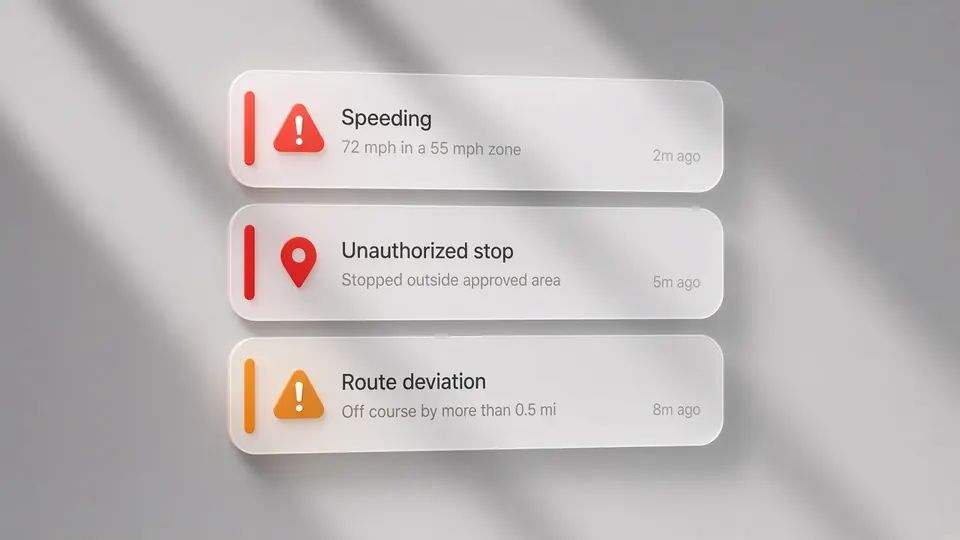
For each weak point, agree an alternative with the driver. Note it on the route plan. If the alternative changes the order of stops, update the pickup order so the driver app shows it correctly when the change is used. If a bus does take a detour, staff will see a wrong-direction alert when it leaves the planned path; an agreed alternative turns that alert from a worry into a confirmation.
Write your messages before you need them
On a flood morning, nobody has time to compose a careful message to two thousand parents. Write templates in advance and keep them ready in the transport manager app:
- School closed today due to heavy rain.
- Buses running late; follow your child's bus on the app.
- Route changed today; pickup at the alternative point.
- Early dispersal; buses leaving school at a stated time.
Announcements reach every parent at once. They are faster and more consistent than calls from class teachers.
Agree who decides
Decide in advance who has the authority to delay buses, change routes or close transport on a rain day, and by what time that decision is made. A late decision is the main cause of buses already out on flooded roads with children aboard. The principal, transport head and admin lead should each know their role.
On the day: watch the map
When buses do run on a wet day, the live dashboard is the transport team's main tool. Every bus appears on the map, updated about every 5 seconds from its 4G tracker, with fallback tracking when the signal dips. The team can see which buses are moving, which have stopped and which have left their route. Visited and missed stops show which children have been picked up.
Parents see the same live position in the parent app, with an ETA and an arrival alert about 2 km from the stop. On rain days that means they can keep children indoors until the bus is close, instead of waiting in water at the roadside.
On the day: SOS and attendance
If a bus is stranded, a child is unwell or a road becomes unsafe, the driver or attendant can raise an SOS from the app to the school admin, who sees the bus location on the dashboard. RFID card taps on the bus show exactly which children are on board, which is the first question anyone asks in an emergency. Read more on how the SOS works.
After the rain: review
When the season ends, use trip history to see which routes lost the most time and whether the alternatives worked. Update the weak-point list and alternatives for next year. Ask drivers what they would change; they spend more time on these roads than anyone in the office, and their suggestions are often the most practical ones. Record which announcement templates were used and whether parents understood them, and rewrite any that caused confusion. If cabin cameras or dashcams are fitted, footage linked to the location can help review any incident.
The rest of the year
Chennai's other big challenge is heat, especially from April to June. The same tools help: parents use the arrival alert to keep waits at the roadside short, and the transport team reviews long routes so that children do not spend too long in a hot bus. Through the year, an RFID attendance system on the bus, UHF gate readers and the transport dashboard handle the everyday work.
A checklist for September
| Task | Owner |
|---|---|
| Mark flood-prone and jam-prone stretches on every route | Transport head with drivers |
| Agree an alternative for each and update pickup order | Transport head |
| Save announcement templates in the app | Transport manager |
| Confirm who decides on delays and closures, and by when | Principal |
| Refresh SOS training for drivers and attendants | Transport head |
| Check every bus is reporting on the dashboard | Transport manager |
| Remind parents how the app's alerts and leave work | Admin office |
Talking to parents before the season
Parents are far calmer on a flood day if they have been told in advance what will happen. In September or early October, send a short note that explains how the school decides on delays and closures, where announcements will appear, what the live map will show when a bus is slow, and when a parent should and should not call the office. Remind families to keep the app updated and to apply for leave in the app if a child will not travel, so the bus does not wait at a stop that nobody is coming to. Ask parents to check that their phone number in the school's records is current. A small effort in a calm week saves the transport office hundreds of calls on the worst day of the year.
About Satcop in Chennai
Satcop India makes the 4G GPS tracker, the parent, driver and transport apps, RFID and UHF attendance and optional cameras for school buses. We serve Chennai schools from our head office in Kharadi, Pune, and travel to your campus to demo, install and train. See our Chennai school bus GPS tracking page, or our Coimbatore page for schools elsewhere in Tamil Nadu.
Frequently asked questions
When is the main rain season for Chennai school buses?
The northeast monsoon, usually from about October to December, brings Chennai's heaviest rain. Prepare routes and messages in September.
How do parents know where the bus is on a flood day?
The parent app shows the live bus position and ETA, and sends an alert about 2 km before the stop.
What if a bus has to take a different road because of water?
Agree alternatives in advance. Staff see a wrong-direction alert when a bus leaves its planned path, and the live map shows where it is.
Can a driver call for help if the bus is stranded?
Yes. The driver or attendant can raise an SOS from the app, which alerts the school admin with the bus location on the dashboard.
Do you install in Chennai?
Yes. We serve Chennai from our head office in Pune and travel to schools for demos, installation and training.
More guides
Want to see it on your buses?
Share your school, city and bus count. We will WhatsApp you back.
Let's talk.
We visit and demo in your city. Ask for a quote.
WhatsApp +91 91560 88090 · Head Office · Nyati Enthral, Kharadi, Pune 411014