Home › School bus blog › RFP Checklist: 25 Questions to Put in a School Bus Tracking Tender
RFP Checklist: 25 Questions to Put in a School Bus Tracking Tender
When a school trust or chain with campuses in several cities chooses a school bus tracking company, the decision usually goes through a committee, a written request for proposal (RFP), and a comparison sheet. The quality of that comparison depends on the questions. Vague questions get glossy brochures back. Specific questions get answers you can compare.

Related product: school bus tracking system
Below are 25 questions, grouped into sections, that you can paste into your tender. Ask every vendor to answer each one in writing. For a lighter list to use in a first sales call, see My School Ride's 12 questions to ask before you buy.
Tip: ask vendors to answer "Yes / No / Partly" first, then explain. It makes the comparison sheet much easier.
Section A: Company and coverage
- Where are your offices, and how do you serve campuses in other cities? Ask for real addresses, and how installation and service work where there is no office.
- How many schools, buses and students use your system today? Ask for figures they will put in writing.
- Can we speak to two schools of a similar size? References from similar fleets matter more than logos.
- Who designs and makes the hardware? Knowing whether the vendor controls the device affects support and spares.
Section B: Hardware
- What device goes on each bus, and how is it powered and fitted?
- Does tracking work without anyone starting an app? (See GPS device vs driver phone.)
- What happens when a device goes offline, and how will we know?
- Which cameras can be added (inside and road-facing), and can video be matched to GPS time and place?
- What is the warranty and replacement process for faulty devices?
Section C: Software and apps
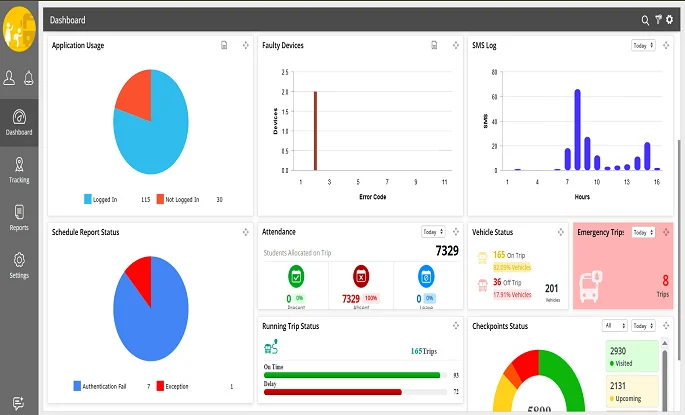
- What does the school dashboard show? Live map, trip history, alerts, reports.
- What does the parent app show, and in which languages?
- Is there an app for drivers and attendants, and what can they do in it?
- Which alerts are available (for example overspeed, route deviation, arrival), and who receives each one?
- Can we set user roles, so each campus sees only its own buses while head office sees all?
Section D: Attendance
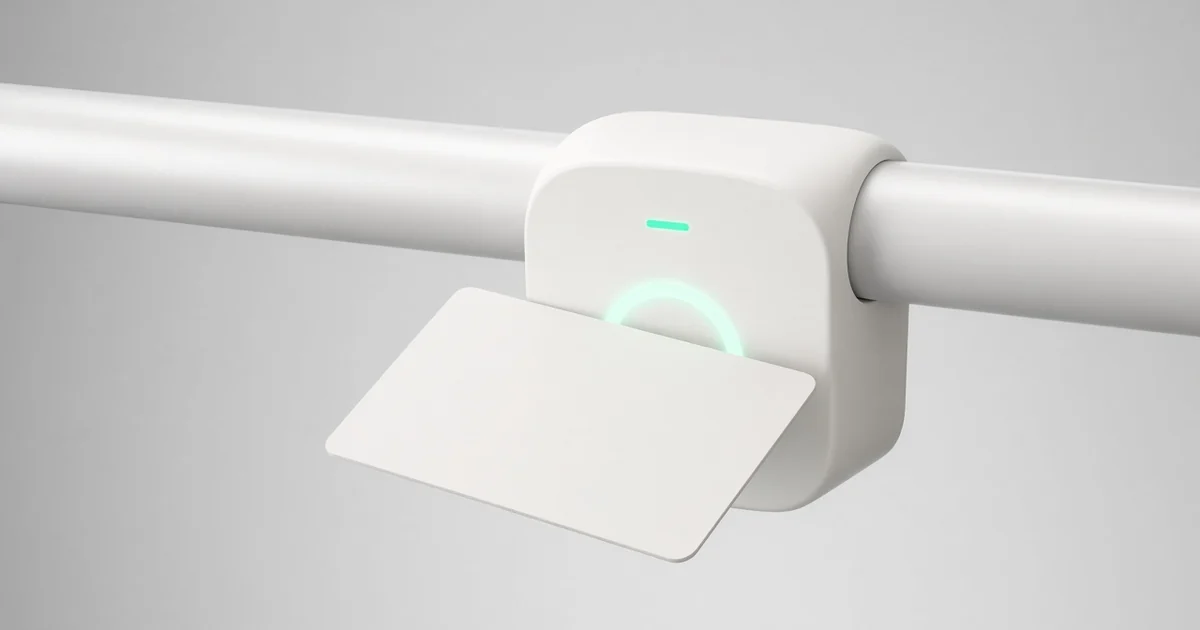
- Do you offer RFID card attendance on the bus? (RFID attendance system)
- Can bus attendance connect with gate attendance? (UHF gate attendance)
- What happens when a student forgets or loses a card?
Section E: Rollout and support
- What is the rollout plan for our fleet size, campus by campus?
- Who trains transport staff, drivers and attendants, and in which language?
- How do parents get onboarded, and what support do you give the school office?
- What are your support hours and response times for a bus offline or app issue?
- Can you visit and demo on our campus before we decide?
Section F: Data and commercial
- Who owns the data, where is it stored, and can we export it?
- What is included in the price, and what is extra? Ask for a line-by-line quote: devices, installation, cameras, cards, software, SIM/data, support.
- What happens at the end of the contract? Can you keep the devices, and will data be handed over?
How to score the answers
Build a simple sheet with a column for each vendor and a row for each question. Score each answer 0 (no), 1 (partly) or 2 (yes, clearly explained). Weight the sections that matter most to you. For many trusts, reliability (Section B) and support (Section E) deserve the highest weight, because those are the things that fail in October, not in the demo.
Do not score price alone. A low quote that leaves out installation or support usually costs more over a year.
Multi-city trusts: extra points
If your schools are spread across cities, for example Pune, Mumbai and Nagpur, or Delhi, Noida and Gurugram, or Bengaluru, Hyderabad and Chennai, add these:
- One contract and one dashboard for all campuses, with campus-level logins.
- A named contact for each region.
- A written plan for installation visits to each city.
Satcop India's head office is in Pune (Kharadi) and we have an office in Hyderabad (Gachibowli). In other cities, including Ahmedabad, Kolkata, Jaipur, Lucknow, Surat, Indore, Chandigarh, Kochi and Coimbatore, we serve and demo at your campus.
A note on rules
Your committee may also want to check transport guidance from your state and board. This checklist does not give legal advice; treat it as a procurement aid.
Where we fit
Our school bus tracking solution combines India-made GPS devices, cameras, RFID and UHF attendance, and the My School Ride app for schools and parents. My School Ride is used by 200+ schools, 10,000+ buses and 200,000+ students. We are happy to answer all 25 questions in writing.
How to score the answers
Give each question a weight before the answers arrive, so the scoring is not shaped by whichever proposal looks best. For most schools, the questions on hardware reliability, attendance, alerts and support deserve the highest weights, because they decide whether the system still works in month six. Score each answer on how specific it is. "Yes, we support this" is weaker than a description of how it works and what it costs. Treat "available on request" or "coming soon" as no until it is shown working.
Running the evaluation
- Shortlist on paper, decide on a demo. Invite two or three vendors to demonstrate on a real bus, with your transport manager present.
- Pilot before rolling out to every campus. One campus or a few routes for a few weeks reveals more than any document.
- Involve the people who will use it. Drivers, attendants and the transport office spot practical problems quickly.
- Check references by phone. Ask a current customer what went wrong and how the vendor handled it.
Keep every written answer on file. When the system is live, the answers become the checklist for the acceptance review at the end of the first term: did the vendor deliver what it promised in the tender, on the timeline it gave, with the support it described? A short review meeting with the vendor at that point keeps both sides honest and gives the committee a clear basis for renewing or changing the contract.
Common mistakes in school bus tracking tenders
- Asking for features without asking how they work on a bad day. Every vendor can show a moving dot in a demo; ask what happens when a device goes offline.
- Leaving out the parent app. Parents judge the whole system by the app, so test it with a few parents before you decide.
- Ignoring training. Drivers and attendants need to know the routine, in their own language.
Frequently asked questions
How do I choose a school bus tracking company?
Send every vendor the same written questions on hardware, apps, attendance, support and data, then score the answers side by side. Ask for references from schools of a similar size.
What should a school bus tracking tender include?
Coverage and offices, hardware, software and apps, attendance, rollout and support, and data and commercial terms. The 25 questions above cover each.
Should we choose the lowest quote?
Not on price alone. Compare what each quote includes, such as installation, support and data, and how reliable the system is over a school year.
Can one system cover campuses in different cities?
Yes, if it supports campus-level logins and the vendor can install and support in each city. Ask for the plan in writing.
How much does school bus tracking cost for a trust?
It depends on fleet size and features. Ask for a quote with line items.
More guides
Want to see it on your buses?
Share your school, city and bus count. We will WhatsApp you back.
Let's talk.
We visit and demo in your city. Ask for a quote.
WhatsApp +91 91560 88090 · Head Office · Nyati Enthral, Kharadi, Pune 411014